
The most common question in our consultations isn’t about price or dates. It’s this one: “Should we do white or colored?” And then, a beat later: “Which white?”
It sounds like a small decision. It isn’t. The color of your Christmas lights changes how your whole house reads from the street, and the “right” answer depends more on your home than on what’s trending. Here’s how we help people decide.
The three main options
Warm white has a soft, golden glow, a lot like old incandescent bulbs. It feels classic, cozy and elegant.
Cool white is crisp and bright with a slightly blue tone. It feels modern and wintry, a little like snow and ice.
Multicolor is red, green, blue, orange and more. It’s fun, nostalgic and playful, and it’s the look a lot of us grew up with.
Start with the color of your house
This is the part most people skip, and it makes the biggest difference.
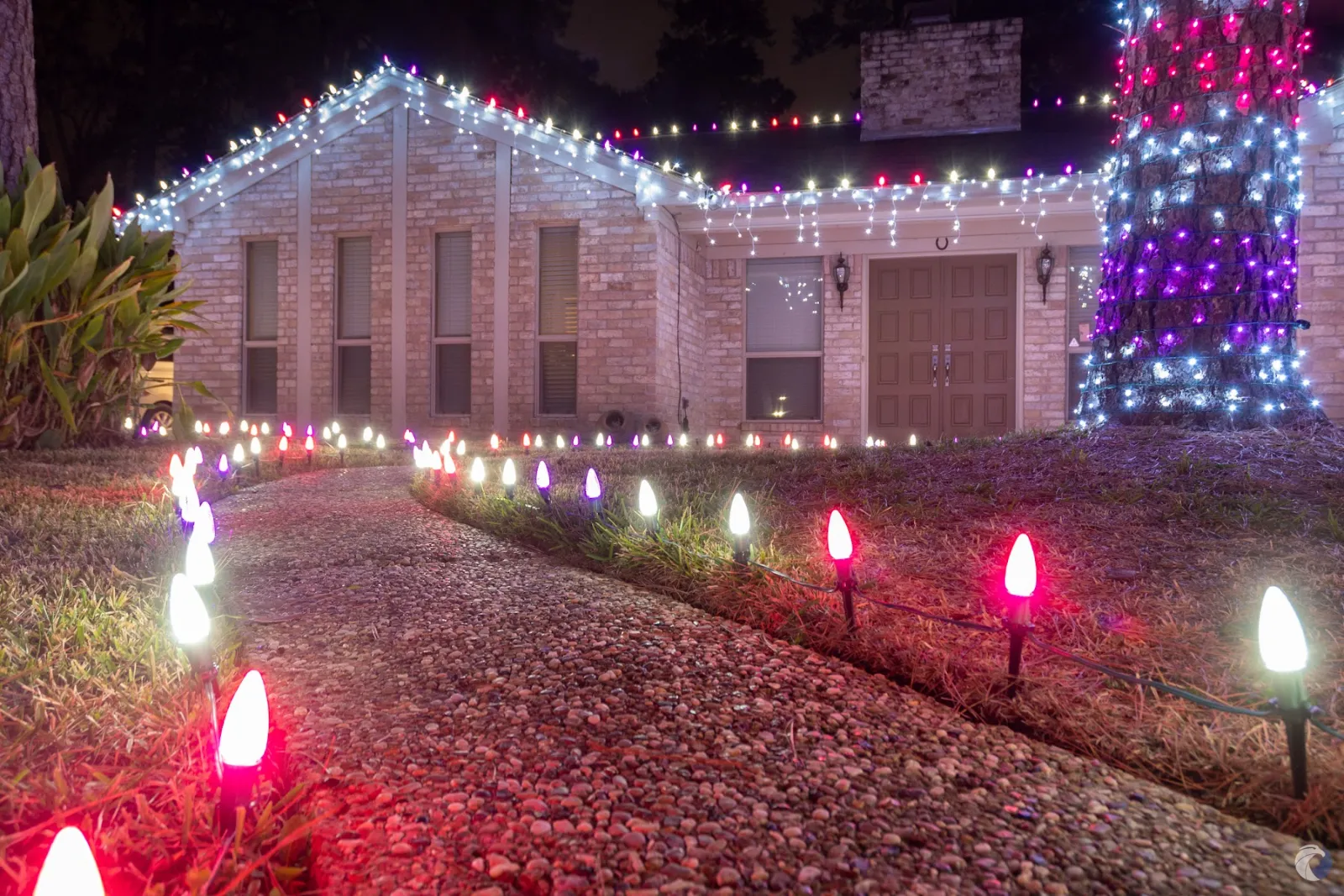
Red or brown brick, tan stone, warm stucco: warm white almost always wins. It brings out the warmth in the materials. Cool white on red brick can look a little harsh, almost clinical.
White, gray or blue siding, modern farmhouse, dark charcoal exteriors: cool white looks sharp here, and so does warm white. This is the one situation where both work and it really comes down to taste.
Homes with lots of trees and greenery: warm white on the roofline with multicolor trees is a combination we install a lot, and it looks great. The white keeps the house looking tidy and the trees add the fun.
Think about your neighborhood, too
We’re not saying copy your neighbors. But it helps to look at the street. On a block where every house is warm white, a cool white or multicolor home will stand out, which might be exactly what you want. In a neighborhood with strict HOA guidelines, a clean warm white display is usually the safest choice.
The mistake we see most often
Mixing warm white and cool white on the same house. From the street it looks like someone ran out of one box and grabbed another. If you want white, pick one tone and stick with it everywhere: roofline, windows, trees and shrubs.
The one exception is tree wraps. Some homes use cool white on the roofline and warm white wraps on big oaks or palms, because the trees sit apart from the house. It can work, but we’d rather show you a photo first than promise it’ll look right.
When multicolor is the right call
Multicolor gets a bad reputation as “less classy,” and honestly, we think that’s unfair. Done well, with clean spacing and a full, even roofline, multicolor looks joyful and generous. It’s a great fit for families with kids, ranch-style homes, and anyone who loves a nostalgic Christmas.
Plenty of families switch from warm white to multicolor after the kids ask for it year after year, and the house suddenly feels more like Christmas to everyone. Sometimes that’s the whole answer.
What about permanent lighting?
If you’re thinking about permanent lighting, the color question mostly goes away. You can switch between warm white, cool white and full color from your phone, so you could do warm white for Thanksgiving week and multicolor for Christmas morning.
A simple way to decide
- Look at your house at dusk and notice whether the exterior feels warm (brick, stone, tan) or cool (white, gray, blue).
- Decide the mood: classic and elegant, crisp and modern, or fun and nostalgic.
- Pick one white tone for the house, or go multicolor.
- Decide whether trees get the same color or a contrast.
- If you’re still stuck, ask your designer for a quick mock-up or photos of similar homes.
An honest caveat
Photos online can be misleading. Cameras often make warm white look orange and cool white look blue. What matters is how the lights look in person, at night, from the street. That’s why our designers come to your home before you commit to anything.
Still deciding?
There’s no wrong answer if you pick one look and do it well. The homes that stand out are the ones with clean lines, even spacing and a clear idea behind the design, whatever the color. If you’d like help choosing, book a free consultation and one of our designers will walk your property with you in Houston or Austin.